
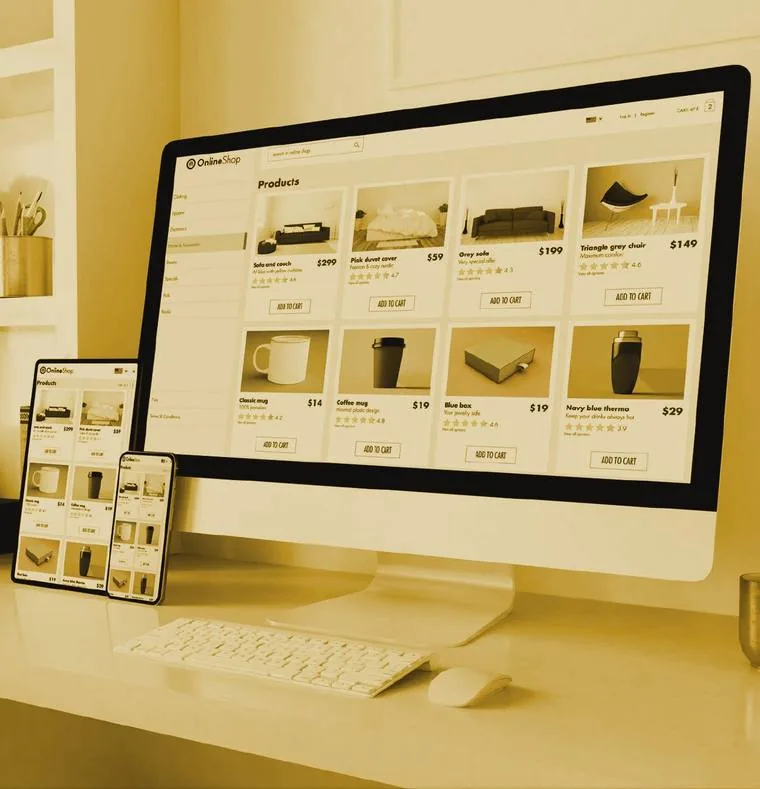
A good website in Arabic is not an English website with the text translated. Reading direction, typography, forms, search behavior and trust signals all change. When these details are right, visitors feel at home and buy more. When they are wrong, the site feels foreign, and customers leave without saying why.
This guide covers what to get right when you build an Arabic-first website or online shop: right-to-left design, performance on mobile networks, checkout, bilingual visibility in search engines and the ongoing care a site needs. It reflects how we deliver websites and e-commerce for organizations in Sudan and the MENA region.
Key takeaways
- Mirror the layout for right-to-left, not only the text, and test mixed Arabic and English early.
- Keep pages light: compressed images, few scripts, caching and reliable hosting.
- Simplify checkout, show delivery cost early and offer payment methods customers already trust.
- Give Arabic and English their own consistent addresses, titles, descriptions and hreflang tags.
- Maintain the site with updates, backups, monitoring and testing after every change.
Design for right-to-left from day one
Right-to-left support is more than aligning text to the right. The whole layout should mirror: navigation, sliders, progress bars, icons that imply direction, spacing and the order of columns. Back arrows point the other way, and the primary button usually sits on the opposite side.
Typography needs care. Choose an Arabic font designed for screens, with comfortable line height, because Arabic letters carry marks above and below the line. Avoid tiny sizes and heavy letter spacing, which breaks the connection between letters.
Test the awkward parts early: forms that mix Arabic and English, phone numbers, email addresses, prices with currency symbols and product codes. Mixed-direction text breaks most often. Build one bilingual component library and test each component in both directions, so every new page inherits the right behavior.
Keep pages light for mobile networks
Most visitors reach your site on a phone, often on a mobile network that is not fast. A page that takes ten seconds to appear loses the sale, and search engines also reward speed.
Compress and resize images, and serve modern formats such as WebP. Load images below the fold lazily. Limit scripts and third-party widgets, and remove anything that does not earn its weight. Use caching so returning visitors do not download the same files again, and choose reliable hosting with monitoring and backups.
Measure on real phones and real networks, not only on a fast office connection. Aim for a main page that is usable within a few seconds and that remains readable even before every image has loaded. Our article on mobile apps for low-bandwidth markets shares more techniques that also apply to websites.
Make checkout simple and trusted
Checkout is where most online shops lose customers. Keep the steps few and the choices clear. Ask only for what you need, allow guest purchase and let people review the basket before paying.
Offer the payment options your customers already use, such as local payment apps, bank transfer or cash on delivery where suitable, as well as cards. Show delivery time and cost early, before the last step, because surprise fees are the most common reason for abandoned baskets.
Trust signals matter. Show a real address, phone number and WhatsApp contact, clear return and privacy information and honest product photos. For a shop selling to retail customers, pairing the website with a point-of-sale system such as ORANGE keeps online and in-store stock in sync.
Be visible in both languages
Search engines treat Arabic and English as separate audiences, so each needs proper attention. Create a clear structure with separate, consistent addresses for each language and tell search engines about the relationship using hreflang tags. Write real titles and descriptions in each language instead of translating mechanically.
Research the words people actually type. Arabic search behavior differs from English: spelling variations, dialect words and mixed terms are common. Use natural headings and short paragraphs, answer common questions directly, and add helpful internal links between pages.
Make the technical basics solid: fast pages, mobile-friendly layout, a sitemap, clean addresses and structured data that describes your business, products and articles. Guides like this one, with clear headings and a FAQ, help both readers and search engines understand your expertise.
Accessibility, content and ongoing care
A site that everyone can use performs better. Use sufficient color contrast, meaningful headings, descriptive image text, keyboard-friendly navigation and readable font sizes. These practices also help search engines and people in bright sunlight on small screens.
Content is the engine of growth. Publish useful guides, product information and answers to real questions, in both languages. Keep it accurate and dated, and update it when things change.
Finally, plan for maintenance. Keep software updated, back up regularly, monitor uptime and test forms and checkout after every change. Our QA and testing service helps teams release changes confidently. A website is not a one-time project. It is a living channel that improves with attention.
A practical example
Imagine a furniture shop in Khartoum that sells through Instagram and WhatsApp. It builds an Arabic-first website with a mirrored layout, compressed product photos, a short checkout and a clear delivery table. It publishes a few guides, such as how to measure a sofa for a doorway, in Arabic and English. Within weeks the shop sees fewer repeated questions, more orders placed directly on the site and better results from search, because pages load quickly and answer real questions.
Plan your Arabic-first website
A strong Arabic-first site combines mirrored design, light pages, a trusted checkout, bilingual search visibility and steady care. If you are planning a new website or a redesign, begin with your audience, your goals and the actions you want visitors to take.
The MOMK team designs and builds fast, bilingual websites and online shops. Explore our website and e-commerce service, see the Insights page for related guides, or contact us to discuss your project.
Frequently asked questions
Why does an Arabic website need a different design?
Because reading direction, typography, forms and mixed Arabic and English text behave differently. A properly mirrored layout and tested components make the site feel natural and trustworthy.
Can one website serve Arabic and English?
Yes. A bilingual site with separate, consistent addresses for each language, language switching and proper search tags serves both audiences without duplication problems.
How can we reduce abandoned baskets?
Keep checkout short, show delivery cost and time early, offer familiar payment options and display clear contact and return information. Testing the flow on real phones also finds hidden problems.
Does MOMK maintain websites after launch?
Yes. We offer hosting, monitoring, backups, updates and support so your website stays fast, secure and current after launch.
How fast should a website load on mobile?
Aim for the main content to appear within a few seconds on an average mobile connection. Compress images, limit scripts and use caching, then test on real phones.
Which payment options should an online shop offer?
Offer what your customers already use, such as local payment apps, bank transfer, cards and cash on delivery where suitable, and confirm each transaction clearly with a receipt.
Should the Arabic site be a translation of the English site?
Not mechanically. Adapt the wording, examples and layout for Arabic readers, and use the search terms Arabic speakers actually type.
Does a bilingual website hurt search rankings?
No, if each language has its own consistent address, proper titles and descriptions, and hreflang tags that link the versions. This helps search engines show the right language to each visitor and avoids duplicate content.
Related services, solutions and reading
- Websites & E-commerce: Fast, accessible, bilingual websites and online shops that convert and reflect your brand.
- Optimized Hosting: Shared, dedicated, cloud or hybrid hosting that is secure, monitored and ready to scale.
- QA & Testing: Functional, performance and security testing that finds defects before your users do.
- ORANGE Point of Sale: A fast, friendly POS for shops, restaurants, cafes and groceries: transactions, inventory, loyalty and sales analytics.
- Mobile apps for low-bandwidth markets: Offline-first design, small payloads and a sensible native or cross-platform choice.
- Hosting, networks and backups that survive power and connectivity gaps: Choose hosting by workload, build redundancy into the network and test your restores.
- Latest industry news for Sudan and MENA: verified headlines on government, cloud, AI and security.
- Talk to the MOMK team: get a short consultation and a tailored plan.
Want help with this?
Our team can review your situation and propose a plan, in person in Khartoum or online.
Contact us